Can Non-Swimmers Do Scuba Diving? Yes — Here's How (2026)
Yes — non-swimmers can do the ₹3,500 Netrani scuba dive with an instructor holding you. See the safety checks and what happens on the day.
Yes — non-swimmers can do the intro scuba dive at Netrani: an instructor holds you, controls your depth and stays with you through the whole guided dive, so you never have to swim. The limits are about safety, not swimming: you need a short briefing, honest medical answers and enough calm to breathe through the regulator at the surface, and the instructor makes the final call on the day.
If you cannot swim, tell the operator before paying. Your water comfort, medical answers, ability to follow instructions, weather, and the instructor's assessment all matter. A one-time guided intro dive is also different from learning to dive independently or earning a certification.
Quick Answer
Can non-swimmers do scuba diving in Murudeshwar?
Yes. Many non-swimmers do the instructor-guided intro dive at Netrani after a briefing and a suitability check: the instructor holds you and controls the dive. Acceptance is not automatic (medical answers, water comfort and sea conditions matter), and scuba certification courses do require basic swimming.
●Check Suitability Before Paying
Ask the booking team these questions before choosing a package:
- Can this experience accommodate my swimming ability and water comfort?
- What medical questionnaire or clearance is required before travel?
- Where will I practise breathing and signals, and what supervision will be available?
- What happens to the booking if I am not comfortable entering or continuing?
PADI's introductory guidance expects water comfort and the ability to maintain yourself at the surface. Equipment and instructor support do not replace that assessment. Get the participation and cancellation terms in writing; a confirmed boat seat is not an unconditional approval to dive.
Check suitability and available dates
Ask about your travel date, guest count, suitability and the Murudeshwar reporting point. Confirm availability, the total price and cancellation terms before sending an advance.
Netrani Scuba Dive – First-timers · ₹3,500 per person
Regular rate ₹6,000 · season price ₹3,500
See Netrani Scuba Dive – First-timers inclusionsAsk about Netrani Scuba Dive – First-timers on WhatsAppGuest feedback via WhatsApp
Feedback shared by our guests
Guest feedback shared with us on WhatsApp and selected for this website. Individual experiences and wildlife sightings vary.
“Amazing experience! The instructors were very professional and made my first dive memorable.”
“Netrani Island diving was memorable. Saw so many colourful fish and even a turtle!”
Non-swimmer scuba in Murudeshwar should be treated as a supervised introductory activity, not independent diving. The operator and instructor must make the final participation decision on the day.
●How Non‑Swimmer Dives Work
- You receive a briefing and practice breathing in shallow water.
- Confirm the instructor arrangement and supervision before booking; do not assume a guaranteed 1:1 allocation.
- Buoyancy equipment supports the activity, but water comfort and the ability to maintain yourself at the surface still matter.
●Is Scuba Diving Safe for Non-Swimmers?
For a guided intro dive, yes — when the basic rules are followed, not being able to swim is not the main risk. What keeps the dive safe is the set-up around you:
- The instructor holds you and controls depth, pace and direction, so you are never left to manage on your own.
- Your jacket (BCD) is inflated at the surface, so you float while you get used to the regulator.
- Shallow-water practice comes first. You only go down once you are breathing calmly.
- One hand signal ends the dive. The instructor brings you up slowly; nobody will push you to continue.
- The boat does not sail if the sea is unsafe. If the trip is called off for weather, you get a 100% refund or a free date change.
Picture it: you are floating beside the boat at Netrani, the instructor's hand on your jacket, breathing slowly through the regulator. You nod, you sink a little, and the fish are already there. That is what most nervous first-timers are actually signing up for — a calm, held look underwater for about 30–40 minutes, the same time every diver gets.
●Who Is Not Allowed to Scuba Dive?
Not being able to swim does not rule you out of a guided intro dive. These things can, at least until a doctor clears you or the day changes:
- Pregnancy. Scuba diving is not recommended at any stage of pregnancy.
- Asthma, heart conditions, epilepsy or recent surgery. These need a doctor's advice before you dive; answer the medical form honestly.
- A cold, blocked nose, ear or sinus trouble on the day. You may not be able to equalise your ears, so the dive should wait.
- Age. The published package window is 10 to 60 years, and age alone does not confirm eligibility; see the scuba diving age limit.
- Panic that does not settle at the surface. If you cannot breathe calmly through the regulator while floating, the instructor will not take you down, and that is the right call.
- A flight within the next day. Schedule flights at least 12–18 hours after diving; the next day is simplest.
●Scuba Diving vs Snorkelling for Non-Swimmers
Travelling with a non-swimmer? Ask us first
Free to check your date
Send your date on WhatsApp first. You pay the ₹500 per-person advance only after the slot, total price and reporting time are confirmed in writing.
Weather cancels? You don't lose money
If the sea is unsafe and the trip is called off, you get a 100% refund or a free date change.
One price, nothing added at the jetty
Netrani boat ride, scuba gear, instructor support and underwater photos/videos are already inside the package price.
Plans change? Cancel early
Cancel more than 24 hours before the trip and the advance is normally refundable.
Weekend and holiday morning boats are the first to fill, so a quick date check now keeps your preferred slot open.
●What the Instructor Actually Does Underwater
Your instructor controls the pace, checks your breathing, and guides the route. They also handle small adjustments like mask position, buoyancy changes, and direction so you can focus on staying calm.
If you want to stop, you can signal and the instructor will bring you up slowly and safely.
●Intro Dive vs Scuba Certification
| Experience | Can a non-swimmer participate? | Important limit |
|---|---|---|
| Supervised intro or try dive | Sometimes, after water-comfort and medical checks | The instructor controls the experience and may stop it at any time |
| Open Water certification | Basic swimming ability is required | PADI lists a swim and water-survival assessment for certification |
| Snorkelling | Depends on water comfort and the operator's support setup | Floating at the surface can still be stressful for a non-swimmer |
●Simple Prep for Non‑Swimmers
- Practice slow breathing through your mouth (like sipping through a straw).
- Keep your hands relaxed at your sides.
- If water enters your mask, signal the instructor and follow their quick fix.
- Tell the instructor in advance if you feel anxious in water.
●Hand Signals You Should Know
You only need a few simple signals:
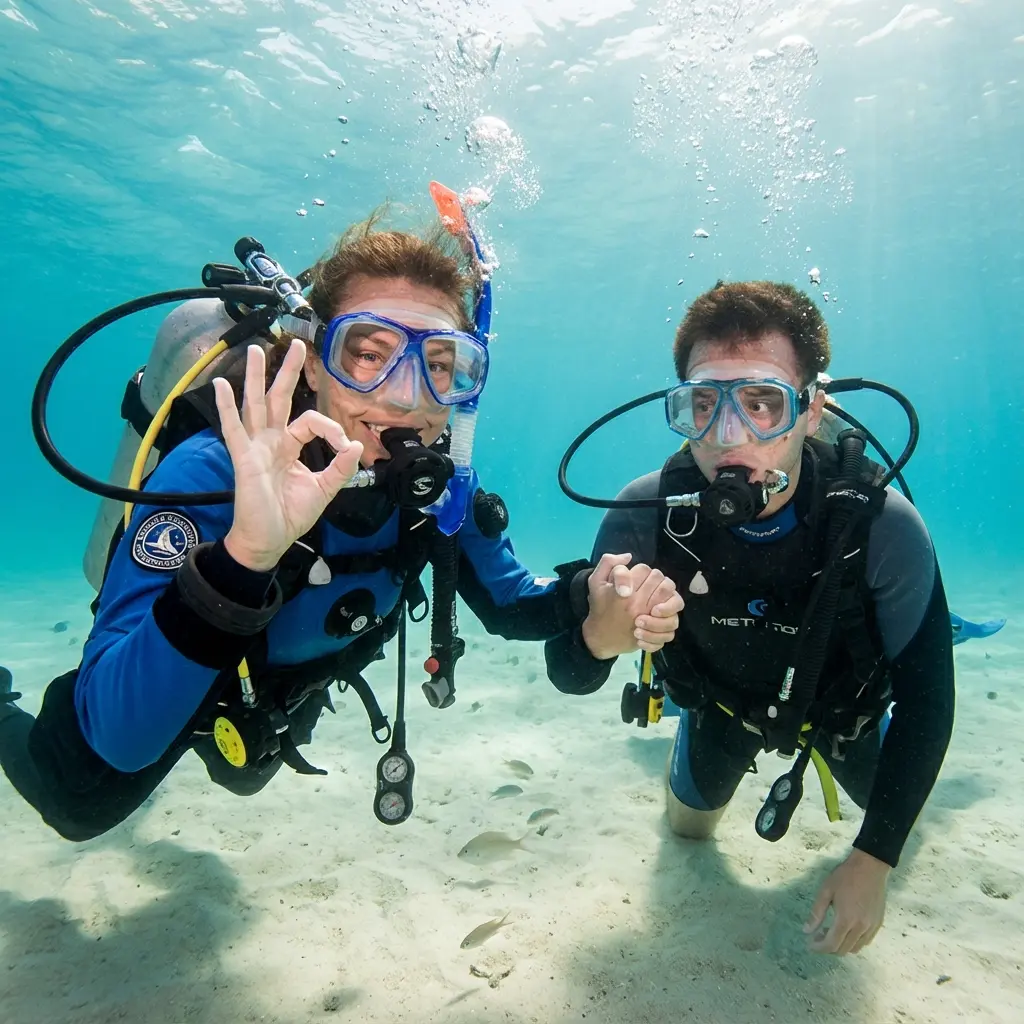
- OK (circle with your fingers)
- Up (thumb up) to end the dive
- Ear problem (point to ear)
Your instructor will show these before you enter the water.
●Shallow‑Water Practice Helps a Lot
Before the main dive, you’ll spend a few minutes in shallow water to practice breathing and basic signals. This is where most non‑swimmers gain confidence, so take your time and ask questions.
●Best Package for Non‑Swimmers
●What to Expect on Dive Day
- Boat timing: morning batch reports at 7:30–8:30 AM and is back by 1:30–2:00 PM; afternoon batch reports at 12 noon and is back by 6:00–6:30 PM.
- Dive time: about 30–40 minutes underwater for every diver; the instructor can end it sooner for comfort or sea conditions.
- Inclusions: Boat ride, gear, instructor, and photos.
●What to Wear and Bring
- Comfortable swimwear and a change of clothes
- Towel and water bottle
- Light breakfast before the boat (avoid heavy meals)
Everything else, including the wetsuit and gear, is provided by the operator.
●If You Wear Glasses
●Quick Booking Links
- Netrani Scuba Diving Package (₹3,500)
- First-Time (Intro) Scuba Dive Guide
- Contact & Call Booking
- How to Reach Murudeshwar
●Why a Guided Intro Can Work for Non-Swimmers
The appeal is close instructor support: you can focus on breathing, equalising, and hand signals while the instructor controls the route and pace. That support reduces the number of tasks a first-timer must manage, but it does not remove the need to feel reasonably calm in open water.
●What If I Panic?
You can stop at any time. Instructors are trained to calm beginners and return to the surface safely.
●Common Fears (And What Usually Happens)
- “What if I can’t breathe?” You will breathe through the regulator just like a mouthpiece. The instructor confirms you’re comfortable before descending.
- “What if water enters my mask?” It’s normal and easy to clear with a simple technique taught during briefing.
- “What if I want to stop?” You can end the dive anytime with a hand signal.
●After the Dive
Many non‑swimmers feel relaxed and surprised by how easy breathing underwater feels. Take a few minutes to rest on the boat, drink water, and review your photos before heading back.
Rest and hydrate after the dive. Tell the crew immediately if you feel unusually unwell rather than assuming every symptom is normal tiredness.
●When to Stay Down Longer
The ₹3,500 dive is planned for about 30–40 minutes underwater, conditions allowing. If the first minutes feel uncomfortable, signal your instructor and come up: staying down should follow your comfort, not pressure.
●Which Package Makes the Most Sense If You Cannot Swim?
Use this quick rule:
- choose the scuba dive (₹3,500) if you want to try breathing underwater — tell the team you cannot swim and let your comfort set the underwater time
- aim for a longer stay underwater only if you already know you stay calm in water
- choose snorkelling (₹1,500) or a boat-only seat (₹1,999) for family members who want the Netrani trip without tank diving
●What Family or Friends Should Expect on the Boat
Non-swimmers often travel with one excited diver and one nervous diver. That changes how the group should plan the day:
- keep breakfast light
- carry a towel and dry clothes
- make sure non-diver companions know the likely return time
- avoid pushing the beginner to “go deeper” unless they genuinely feel ready
The calmer the group feels on the boat, the easier the first dive usually feels underwater.
Frequently Asked Questions
Can non‑swimmers do scuba diving in Murudeshwar?
Is scuba diving safe for non-swimmers?
Which package is best for non‑swimmers?
How long is the dive for beginners?
Is scuba diving safe if I panic?
Who is not allowed to scuba dive?
Can you go scuba diving without certification?
Can a non-swimmer do snorkeling?
●Non-Swimmer Comfort Strategy
Non-swimmers do best when they treat the first few minutes as guided acclimatization, not as performance. Start with breathing at surface, follow hand signals, and descend only after comfort improves.
Ask how the instructor will supervise your session and what happens if you remain uncomfortable. Close support is important, but cannot guarantee that anxiety or panic will not occur.
●Non-Swimmer Dive Flow Table
| Dive Stage | What You Do | Instructor Support |
|---|---|---|
| Surface acclimatization | Breathe slowly and signal comfort | Close face-to-face guidance |
| Initial descent | Descend gradually | Pace control and equalization checks |
| Mid-dive | Keep calm, small movements | Constant monitoring and correction |
| Ascent | Follow step-by-step hand signals | Controlled return to surface |
About this guide
Scuba Murudeshwar Team
Scuba Murudeshwar editorial team
The Scuba Murudeshwar team maintains these planning guides. Package details should be confirmed for your date; participation is assessed by the dive team.
Helpful Next Guides
Keep Planning This Trip
These are the next pages most readers open after this guide. They stay close to the question you are probably deciding right now instead of sending you through the whole site.
Open the easiest first-dive option
The best fit if confidence is the real barrier.
See which option feels least intimidating
Compare scuba, snorkelling and a boat-only seat properly.
Understand how the day will flow
Knowing the schedule reduces nerves for many first-timers.
Check the booking steps before committing
Helpful if the family wants clarity before paying.
Ready to Experience the Underwater World?
Join us at Netrani Island for an unforgettable scuba diving adventure. Check suitability, sea conditions and availability before booking.
Call to Reserve